What Is Islamic Creed (Aqidah)? A Beginner’s Guide
Learn what Islamic creed (Aqidah) means in this beginner’s guide. Discover the six pillars of faith, their importance in Islam, and how they shape a Muslim’s beliefs and daily life.
Islamic creed, known as Aqidah in Arabic, is the foundation of a Muslim’s faith. It explains what Muslims believe about Allah, His angels, His revealed books, His messengers, the Day of Judgment, and divine decree. Understanding Aqidah helps Muslims build a strong relationship with Allah and learn the essential beliefs of Islam. This beginner’s guide explains the meaning of Islamic creed, its main principles, and its importance in everyday life.
1. What Does Aqidah Mean in Islam?
The Arabic word Aqidah refers to a firm belief held with conviction. In Islam, it describes the fundamental beliefs that a Muslim accepts based on the Quran and the teachings of Prophet Muhammad (peace be upon him). These beliefs shape how Muslims understand their Creator, the purpose of life, and what happens after death.
Islamic creed is more than a collection of ideas. It provides a foundation for worship, moral choices, and daily actions. When Muslims understand their faith, they can worship Allah with greater sincerity and develop a clearer understanding of their responsibilities. For beginners, learning Aqidah is an important first step toward understanding Islam.
2. What Are the Six Pillars of Faith in Islam?
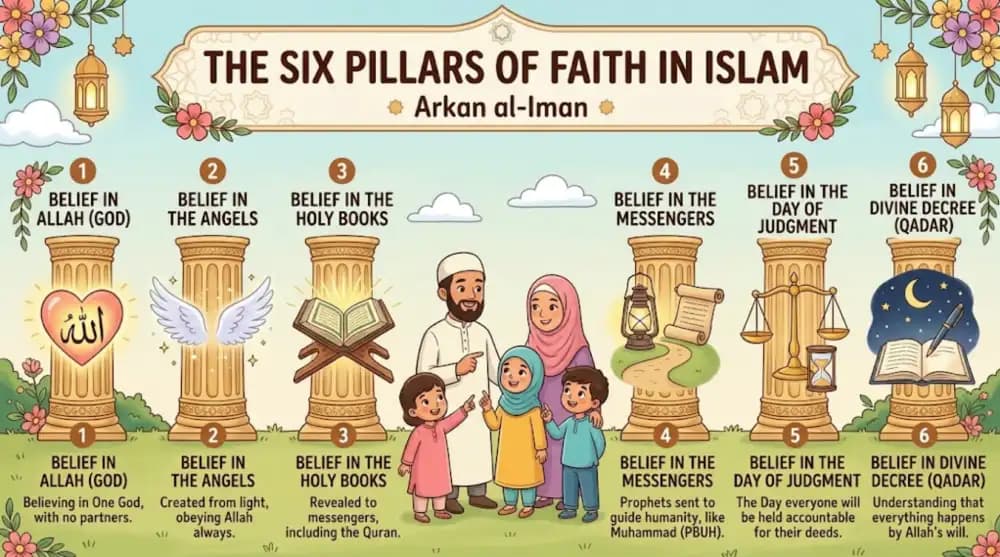
The six pillars of faith are the central beliefs that form the foundation of Islamic creed. They are mentioned in the famous Hadith of Jibril, in which Prophet Muhammad (peace be upon him) explained the meaning of faith.
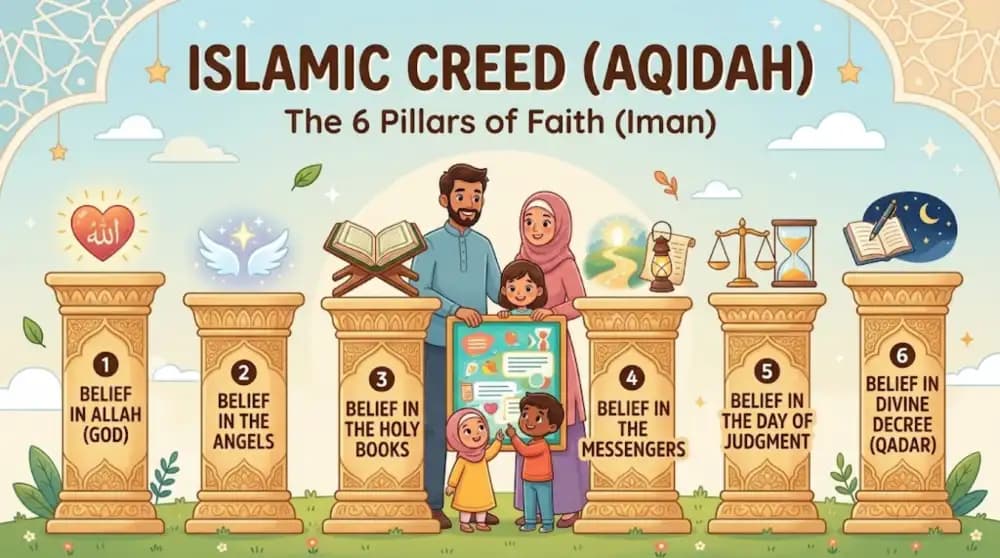
The six pillars are:
- Belief in Allah: Muslims believe that Allah is the one true God, the Creator and Sustainer of everything. He alone deserves worship.
- Belief in the angels: Muslims believe that angels are created by Allah and carry out the duties He assigns to them.
- Belief in the revealed books: Muslims believe that Allah revealed scriptures to His messengers, including the Torah, the Gospel, and the Quran. The Quran is the final revelation.
- Belief in the messengers: Muslims believe that Allah sent prophets and messengers to guide humanity, with Prophet Muhammad (peace be upon him) as the final prophet.
- Belief in the Last Day: Muslims believe that life does not end with death. Everyone will be resurrected and held accountable for their deeds.
- Belief in divine decree (Qadar): Muslims believe that Allah has complete knowledge of all things and that everything occurs according to His will and wisdom.
Together, these six pillars provide a framework for understanding Islamic faith. They also help Muslims reflect on their purpose, responsibilities, and relationship with Allah.
3. Why Is Islamic Creed Important?
Islamic creed plays a central role in a Muslim’s life because it shapes both belief and action. A sound understanding of Aqidah helps Muslims recognize the importance of worshipping Allah alone and following His guidance. It also gives meaning to religious practices, such as prayer, fasting, charity, and pilgrimage.
Furthermore, strong faith can encourage patience during hardship, gratitude during times of ease, and trust in Allah in every situation. Belief in the Last Day reminds Muslims that their actions have consequences, while belief in divine decree encourages them to seek Allah’s help and remain hopeful when facing difficulties.
For these reasons, learning Aqidah is not limited to scholars or advanced students of Islamic studies. Every Muslim can benefit from studying the basic principles of faith and applying their lessons to everyday life.
4. How Can Beginners Learn Aqidah?
Beginners should start by learning the six pillars of faith and understanding their meanings through reliable Islamic sources. The Quran is the primary source of Islamic belief, while authentic teachings of Prophet Muhammad (peace be upon him) explain and clarify these foundations.
It is also helpful to study introductory Islamic books with clear explanations and seek guidance from qualified teachers who can answer questions and explain difficult concepts. Reading explanations of Quranic verses related to faith can deepen understanding and help connect Islamic teachings with daily life.
Most importantly, learning should be gradual and consistent. Rather than trying to understand every theological discussion at once, beginners can focus on the essential beliefs first and build their knowledge over time. This approach makes Islamic creed easier to understand and encourages a lifelong journey of learning.
5. What Is the Difference Between Aqidah and Worship?
Aqidah and worship are closely connected, but they serve different purposes. Aqidah concerns what a Muslim believes, while worship concerns the acts through which a Muslim expresses devotion to Allah.
For example, believing that Allah alone deserves worship is part of Islamic creed. Performing the five daily prayers is an act of worship that reflects this belief. Similarly, believing in the Last Day can encourage a Muslim to act responsibly, seek forgiveness, and do good deeds.
In this way, correct belief provides the foundation for sincere worship. Understanding both Aqidah and acts of worship helps Muslims develop a more complete understanding of their religion and put their faith into practice.
Building a Strong Foundation in Islamic Faith
Islamic creed (Aqidah) is the foundation of Muslim belief and a key to understanding the essential teachings of Islam. Through the six pillars of faith, Muslims learn about Allah, His angels, His revelations, His messengers, the Last Day, and divine decree.
For anyone beginning to study Islam, learning Aqidah is a valuable first step. By studying the Quran, learning authentic teachings, and seeking reliable guidance, beginners can gradually strengthen their understanding of faith and discover how these beliefs guide worship, character, and everyday life.