Sincerity in Worship and Righteous Deeds
Discover the meaning of Islamic Aqidah, the importance of Tawhid and sincere worship, and how righteous deeds reflect true faith in Allah, inspired by Surah Al-Kahf (18:110).

Islamic creed (Aqidah) is the foundation of a Muslim’s faith. It shapes how believers understand Allah, worship Him, and live their lives. A sound Aqidah rests on sincere belief in Allah, devotion to Him alone, and a commitment to righteous deeds. These principles are beautifully summarized in the final verse of Surah Al-Kahf, which connects the hope of meeting Allah with two essential responsibilities: doing good deeds and avoiding shirk.
Allah says: Quran, Surah Al-Kahf (18:110)
فَمَن كَانَ يَرْجُو لِقَاءَ رَبِّهِ فَلْيَعْمَلْ عَمَلًا صَالِحًا وَلَا يُشْرِكْ بِعِبَادَةِ رَبِّهِ أَحَدًا
“So whoever expects to encounter his Lord—let him act righteously, and not associate anyone with the worship of his Lord.”
This verse provides a powerful foundation for understanding Islamic Aqidah. It teaches that true faith must be reflected in both sincere worship and righteous actions.
What Is Islamic Aqidah?
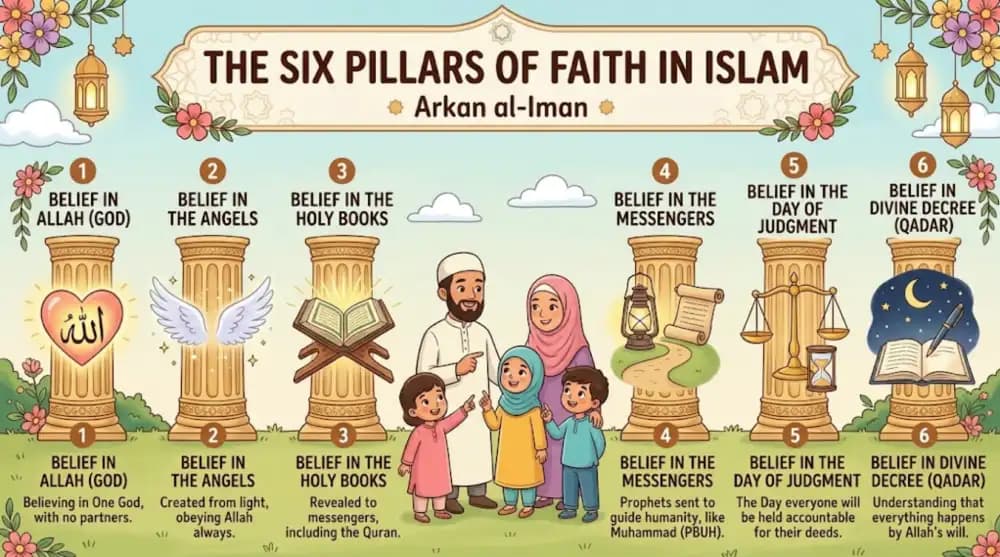
Aqidah refers to the beliefs that a Muslim holds firmly in the heart. In Islam, it includes belief in Allah, His angels, His revealed books, His messengers, the Last Day, and divine decree, both its good and its difficult aspects.
These six pillars of faith form the foundation of Islamic belief. They guide Muslims toward understanding their purpose in life, their relationship with their Creator, and their ultimate return to Him.
However, Islamic creed is not simply a set of beliefs expressed through words. Sound faith should influence a believer’s intentions, decisions, character, and acts of worship. The Quran repeatedly calls people to believe in Allah and follow that belief with obedience and good deeds.
1. Belief in Allah and the Oneness of God
The central principle of Islamic Aqidah is Tawhid, the oneness of Allah. Muslims believe that Allah alone is the Creator, Sustainer, and Lord of all existence, and that He alone deserves worship.
Worship includes prayer, supplication, reliance upon Allah in matters of the heart, and every other act of devotion that Allah has prescribed. A Muslim directs these acts to Allah alone, without associating any partner with Him.
The verse from Surah Al-Kahf explicitly warns against associating anyone with Allah in worship. This warning highlights the importance of protecting Tawhid and keeping one’s faith free from shirk.
Shirk means associating partners with Allah in what belongs exclusively to Him. It contradicts the foundation of Islamic monotheism and is among the most serious matters addressed in the Quran.
Understanding Tawhid helps Muslims worship with clarity, strengthen their relationship with Allah, and recognize that their ultimate devotion belongs to Him alone.
2. Sincerity (Ikhlas): Worship for Allah Alone
The second essential lesson of the verse is sincerity, known in Arabic as Ikhlas. A righteous deed is not only about what a person does; it also concerns why the person does it.
A Muslim may pray, give charity, recite the Quran, teach others, or help someone in need. These actions become acts of worship when they are performed in accordance with Islamic guidance and with a sincere intention to please Allah.
When a person performs good deeds primarily to gain praise, recognition, or admiration, the intention requires careful examination. Islam teaches believers to seek Allah’s acceptance rather than the approval of people.
Sincerity does not mean that a Muslim must avoid every public act of goodness. Public charity, teaching, and encouraging others can all be beneficial. The important principle is to maintain a sincere intention and avoid turning worship into a means of showing off.
Muslims can nurture Ikhlas by renewing their intentions, remembering that Allah knows what is hidden in their hearts, and seeking His reward in both private and public acts of worship.
3. Righteous Deeds: Putting Faith into Practice
Allah commands the believer in this verse to perform righteous deeds. This shows that Islamic faith should be accompanied by actions that reflect obedience to Allah.
Righteous deeds include obligatory acts of worship, such as prayer and fasting, as well as voluntary acts of goodness. They also include honesty, fulfilling promises, caring for parents, supporting those in need, respecting others’ rights, and treating people with justice and mercy.
Yet good intentions alone are not the only consideration. A deed should also be consistent with the guidance of the Quran and the teachings of Prophet Muhammad (peace and blessings be upon him).
For example, giving charity is a noble act, but a Muslim should seek to give in a lawful and sincere manner. Similarly, prayer should be performed with devotion and according to the guidance taught by the Prophet.
The connection between faith and action reminds Muslims that Aqidah is not separate from everyday life. It should be visible in their conduct, their responsibilities, and the way they treat others.
4. Remembering the Meeting with Allah
The phrase “whoever expects to encounter his Lord” directs attention toward the Hereafter. Muslims believe that life in this world is temporary and that every person will return to Allah.
This belief gives purpose to daily life. It reminds believers that their actions matter, that their intentions are known to Allah, and that they should prepare for the Day of Judgment through faith, repentance, and righteous deeds.
Remembering the Hereafter can also help a Muslim remain patient during hardship, avoid wrongdoing when faced with temptation, and continue doing good even when no one offers recognition.
Hope in meeting Allah should encourage both hope in His mercy and a sincere effort to obey Him. It is not merely an expectation expressed in words; it should inspire a life guided by faith and accountability.
5. How to Strengthen Your Islamic Creed
Strengthening Aqidah is an ongoing journey of learning, worship, and self-reflection. Muslims can nurture their faith through several practical habits:
- Study the Quran: Read its verses with reflection and learn their meanings from reliable explanations.
- Learn authentic Islamic teachings: Study the pillars of faith and the foundations of Tawhid through trustworthy Islamic scholarship.
- Protect sincerity: Examine your intentions before and during acts of worship, and seek Allah’s acceptance.
- Maintain regular worship: Establish the obligatory prayers, fulfill religious duties, and build consistent habits of remembrance.
- Practice good character: Be honest, fulfill your commitments, show mercy, and respect the rights of others.
- Repent and seek forgiveness: When you make mistakes, return to Allah sincerely and strive to correct your actions.
These practices help connect belief with daily life. They also encourage Muslims to approach their religion with knowledge, humility, and a desire to grow closer to Allah.
A Sound Aqidah Begins with Sincere Faith
Islamic Aqidah is the foundation upon which a Muslim builds a life of worship and obedience. Surah Al-Kahf, verse 110, brings its central message into focus: those who hope to meet their Lord should perform righteous deeds and worship Him without associating any partner with Him.
This verse reminds believers that faith involves both what they hold in their hearts and how they act. Tawhid protects the purity of worship, Ikhlas guides the intention behind every deed, and righteous actions demonstrate the practical impact of faith.
By learning the Quran, following authentic Islamic guidance, and striving for sincerity in everyday life, Muslims can strengthen their creed and prepare for the meeting with Allah.
May Allah grant us sound faith, sincere intentions, righteous deeds, and a good ending. Amin.