Ashab al-Kahf: The Story of the Companions of the Cave in the Quran
Discover the story of Ashab al-Kahf (the Companions of the Cave) in the Quran. Learn how their miraculous 309-year sleep reveals timeless lessons about faith, patience, trust in Allah, and the resurrection.
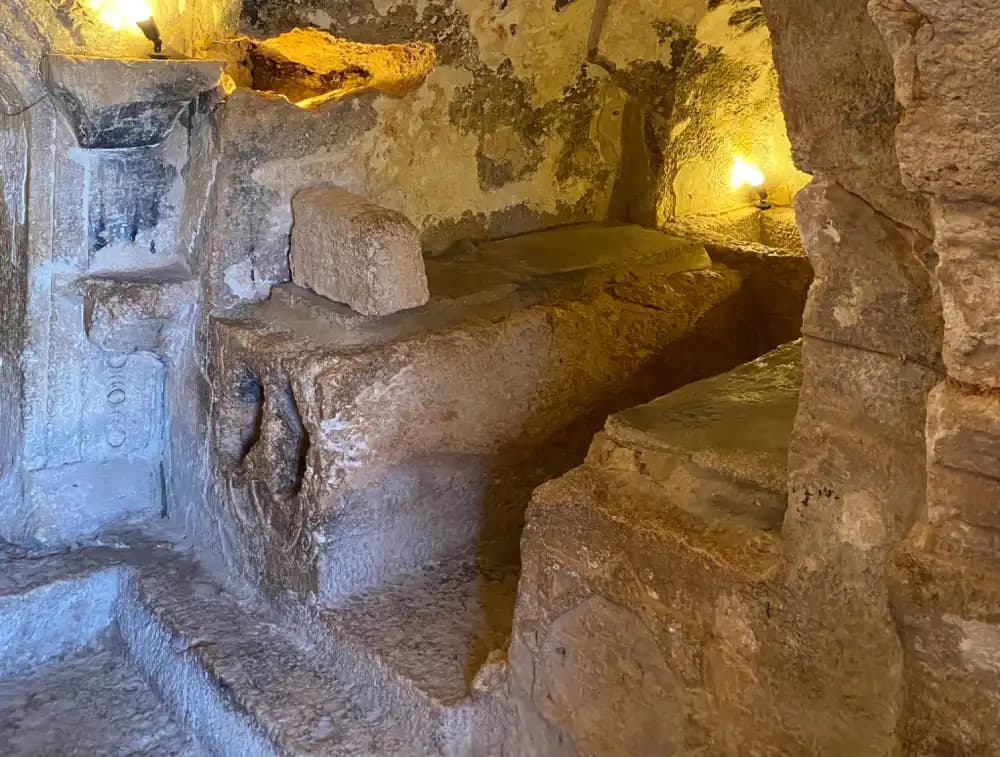
A Story of Faith, Courage, and Divine Protection
Why do Muslims recite Surah Al-Kahf every Friday? Among its most powerful reminders is the story of Ashab al-Kahf (the Companions of the Cave), a group of believing youths who chose faith in Allah over the comfort and approval of their society. Their remarkable story, narrated in Surah Al-Kahf (18:9–26), demonstrates how Allah protects His sincere servants and how even the passage of centuries cannot diminish His power.
The story begins with young believers facing a society that threatens their faith. Rather than surrender their belief, they seek refuge in a cave and entrust their situation to Allah. There, Allah grants them an extraordinary sleep lasting many years before awakening them as a sign of His power.
The Quran does not present this event merely as a miraculous tale. It invites readers to reflect on steadfast faith, divine mercy, the limits of human knowledge, and the certainty of resurrection.
For anyone seeking to understand the Quranic account of Ashab al-Kahf, this story offers enduring guidance for navigating trials while remaining devoted to Allah.
Who Were Ashab al-Kahf?
Ashab al-Kahf means “the Companions of the Cave” in Arabic. Their story appears in Surah Al-Kahf, the eighteenth chapter of the Quran, beginning with a question about the people who slept in the cave and the remarkable signs surrounding their experience.
Allah says: “Or have you thought that the companions of the cave and the inscription were, among Our signs, a wonder?” Quran 18:9,
This opening establishes an important principle: although the event was extraordinary, Allah’s signs are far greater than human beings can fully comprehend.
According to the Quran, these young people believed in their Lord and were granted further guidance by Him. Allah describes their faith and courage in verse 13: “Indeed, they were youths who believed in their Lord, and We increased them in guidance.” Quran 18:13,
Their identity is defined not by their names, nationality, or social status, but by their sincere belief. The Quran does not identify the exact location of their cave, name their ruler, or provide a definitive historical date. These details should therefore not be presented as established Quranic facts.
The central message is clear: young believers can demonstrate remarkable spiritual strength when they place their trust in Allah.
The Background: Young Believers Facing Persecution
The Quran describes the Companions of the Cave as people who rejected the worship of other deities and affirmed their belief in the Lord of the heavens and the earth.
They declared that their Lord was the Lord of the heavens and the earth and that they would never call upon any deity besides Him (Quran 18:14). Their declaration was a rejection of false worship and an affirmation of pure monotheism, or Tawhid.
The surrounding society opposed their belief. Although the Quran does not name the ruler or describe every detail of the persecution, the youths’ decision to withdraw into the cave reveals the seriousness of their circumstances.
They understood that remaining in their environment threatened their ability to preserve their faith. They therefore chose to separate themselves from the pressures surrounding them and seek a place where they could worship Allah.
This decision teaches an important lesson about religious commitment. Faith is not merely a private conviction; it can require difficult choices, sacrifice, and the courage to resist social pressure.
The youths then turned to Allah with a heartfelt supplication: “Our Lord, grant us from Yourself mercy and prepare for us from our affair right guidance.” Quran 18:10,
Their prayer contains two essential requests: mercy from Allah and guidance toward the right course of action. They did not rely solely on their own judgment. Instead, they sought divine assistance before entrusting their future to Him.
The Miracle of the Cave: A Sleep That Lasted 309 Years
After the youths entered the cave, Allah caused them to sleep for an extraordinary period.
The Quran describes how He sealed their hearing for a number of years, protected them within the cave, and preserved their bodies in circumstances that were beyond ordinary human experience (Quran 18:11–12).
Allah also describes the cave’s surroundings. The sun appeared to move away from their sleeping place, while the youths remained in a spacious area within it. Their bodies were turned from side to side, and their dog lay at the entrance (Quran 18:17–18).
These details emphasize that their protection was not accidental. The Quran presents their preservation as part of Allah’s wisdom and power.
Why Was Their Dog at the Entrance?
The Quran explicitly mentions the dog that accompanied the youths, describing it as stretching its forelegs at the entrance of the cave.
This detail is part of the account Allah chose to preserve in revelation. However, the Quran does not identify the dog’s name or breed, so such details should not be treated as established facts.
The dog’s presence also highlights how the Quran focuses on the event’s meaningful details without satisfying every curiosity about its historical setting.
How Long Did Ashab al-Kahf Sleep?
Allah states that the Companions of the Cave remained in their cave for three hundred years, with nine additional years (Quran 18:25).
The duration is therefore 309 years, as explicitly stated in the Quran.
Classical Muslim commentators commonly explain the additional nine years as corresponding to the difference between three hundred solar years and approximately three hundred lunar years. This interpretation helps explain the number without changing the Quranic account.
The verse does not invite speculation about the mechanics of the miracle. Rather, it emphasizes that time, life, and death remain under Allah’s complete authority.
For believers, the long sleep is a powerful reminder that Allah can preserve His servants through circumstances that appear impossible from a human perspective.
The Awakening: A Sign of Allah’s Power
When Allah awakened the youths, they began asking one another how long they had remained asleep.
Some thought they had slept for a day or part of a day. Others left the matter to Allah, acknowledging that their Lord knew best how long they had remained there (Quran 18:19).
This exchange illustrates the limits of human perception. The youths had experienced what seemed like a short period, even though centuries had passed.
They then sent one of their companions to the city with silver coins to obtain food. He was instructed to seek wholesome provisions, act discreetly, and avoid drawing attention to their whereabouts.
Their caution reveals that they initially understood their situation as a continuation of their earlier circumstances. They did not yet fully grasp the scale of the change that had taken place.
Allah eventually made their situation known to the people so that they would recognize His promise as true and understand that the Hour—the Day of Resurrection—was beyond doubt (Quran 18:21).
This is the central theological lesson of the story. Just as Allah awakened the youths after a prolonged sleep, He is fully able to resurrect human beings after death.
The Companions of the Cave therefore provide a sign of resurrection, reminding humanity that the apparent finality of death does not limit the power of the Creator.
Divine Wisdom and the Importance of Humility
After describing the awakening, the Quran mentions disagreements among people about the number of the youths. Some speculated about their number, while others offered different estimates. Allah concludes the discussion by emphasizing that He knows their number best (Quran 18:22).
The passage teaches readers not to confuse speculation with revealed knowledge. Where Allah has not provided a definitive answer, Muslims should avoid presenting uncertain reports as established religious facts.
The Quran also instructs the Prophet Muhammad to refer knowledge of their duration to Allah, who knows the unseen of the heavens and the earth (Quran 18:26).
This principle remains relevant today. The story of Ashab al-Kahf contains enough guidance to transform a believer’s understanding of faith without requiring certainty about every historical detail.
The purpose of revelation is not simply to satisfy curiosity. It is to guide human beings toward truth, humility, and obedience to Allah.
Five Practical Lessons from Ashab al-Kahf
1. Protect Your Faith, Even When It Is Difficult
The youths refused to abandon their belief despite pressure from their society. Their example encourages Muslims to maintain their religious principles when confronted with mockery, temptation, or opposition.
Protecting faith does not require unnecessary confrontation. It requires wisdom, patience, and a clear understanding of one’s responsibilities.
2. Young People Can Be Strong in Faith
Allah specifically identifies the Companions of the Cave as youths whose guidance increased through their belief (Quran 18:13).
Their story challenges the assumption that spiritual maturity belongs only to older generations. Young Muslims can develop strong convictions, seek beneficial knowledge, and make choices that reflect sincere devotion to Allah.
3. Make Dua and Seek Allah’s Guidance
The youths began their journey by asking Allah for mercy and right guidance.
Their supplication teaches believers to turn to Allah during uncertainty, seek His help sincerely, and ask Him to guide their decisions. Difficult situations should not lead to despair or reliance on personal ability alone.
4. Understand Tawakkul: Trust in Allah While Taking Action
Tawakkul means placing one’s trust in Allah while taking appropriate and lawful steps.
The Companions of the Cave prayed, sought refuge, and acted carefully. Their example illustrates that reliance on Allah is not passive resignation. A believer should use sound judgment, take reasonable precautions, and entrust the outcome to the Creator.
5. Remember the Resurrection
The awakening of the youths became a sign for people to recognize the truth of resurrection.
Muslims are reminded that worldly life is temporary and that accountability before Allah is certain. This awareness encourages righteous conduct, repentance, sincerity, and preparation for the Hereafter.
Why Do Muslims Read Surah Al-Kahf on Friday?
Surah Al-Kahf is associated with Friday recitation because of narrations encouraging Muslims to read it on this blessed day.
A narration from Abu Sa’id al-Khudri, reported in collections including Al-Bayhaqi, describes a light granted to someone who recites Surah Al-Kahf on Friday. Scholars have discussed the chains of these narrations, and the practice is widely recommended by Muslim scholars.
There is also an authentic narration in Sahih Muslim encouraging the memorization of the first ten verses of Surah Al-Kahf as protection from the trial of the Dajjal, the great deceiver who will appear before the Day of Judgment.
Reading the surah provides an opportunity to reflect on its interconnected themes: the Companions of the Cave and steadfast faith, the owner of the two gardens and worldly temptation, Musa and Khidr and the limits of human knowledge, and Dhul-Qarnayn and responsible power.
Rather than reading solely for completion, Muslims can benefit by reflecting on the meanings and applying the surah’s lessons to daily life.
Frequently Asked Questions About Ashab al-Kahf
1. Who were Ashab al-Kahf in the Quran?
Ashab al-Kahf were a group of believing youths who withdrew to a cave to preserve their faith. Allah caused them to sleep for many years and later awakened them as a sign of His power and the reality of resurrection. Their story is narrated in Surah Al-Kahf, verses 9–26.
2. How long did Ashab al-Kahf sleep?
According to Quran 18:25, the Companions of the Cave remained asleep for three hundred years, with nine additional years, making a total of 309 years.
3. What was the name of the dog of Ashab al-Kahf?
The Quran mentions the dog that accompanied the youths and lay at the cave’s entrance, but it does not provide the dog’s name. Names found in later historical accounts should not be presented as confirmed Quranic facts.
4. What is the main lesson of the story of Ashab al-Kahf?
The main lessons include steadfast faith, reliance on Allah, seeking divine guidance, humility regarding the unseen, and certainty in the resurrection. The story shows that Allah’s power is not limited by time or by what human beings consider possible.
Keep Your Faith Alive Through Every Trial
The story of Ashab al-Kahf is a timeless reminder that sincere faith can remain strong even when circumstances appear overwhelming. The youths chose devotion to Allah, sought His mercy, and were protected through a miracle that became a sign for generations.
Their story also directs attention beyond the miracle itself. It calls believers to trust Allah, seek guidance through prayer, remain humble before divine knowledge, and prepare for the Hereafter.
As you read Surah Al-Kahf, take time to reflect on the meaning of its verses and the guidance they offer for your own life. Explore a reliable Quran translation and authentic tafsir to deepen your understanding of this remarkable account.
May Allah strengthen our faith, grant us beneficial knowledge, and guide us toward what pleases Him.